Resource Wise, Future Ready: METRONET’s Sustainable 'Kit-of-Parts' Solution
Resource Wise, Future Ready: METRONET’s Sustainable 'Kit-of-Parts' Solution
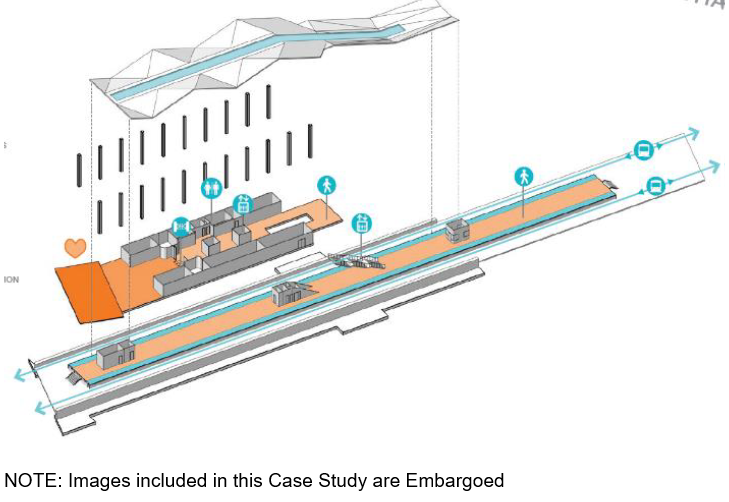
In order to streamline the construction, MELCONNX has adopted a modular design strategy, Kit-of-Parts, for all five Morley-Ellenbrook Line stations. This approach creates a common design language across all stations through curated and consistent forms, station accommodation modules, materials and finishes, while still providing sufficient flexibility to allow each station to retain its own identity.
The Kit-of-Parts approach provides the ability to assemble station components easily and efficiently. It also acknowledges that, over time, parts may need to be dismantled for repair or replacement or be reconfigured to meet changing needs. This system-wide Kit-of-Parts strategy is based on providing reliable, high-quality and readily available materials and equipment that have been selected to meet the Project’s design life requirements.
These design and construction efficiencies will drive down waste and materials usage and assist the MEL Project in achieving our resource efficiency sustainability targets.
Challenges and outcomes
Challenges:
- Need to balance line-wide commonality with unique design responses for each precinct.
- Requirement to meet sustainability targets, reduce waste, and improve efficiency.
- Ensuring flexibility for future repairs, replacements, or reconfigurations.
Outcomes:
- The pioneering offsite production approach of designing station modules for Manufacturing and Assembly (DfMA) offers productivity and quality benefits, known as DfMA 70:60:30, whereby 70% of the construction is targeted to be conducted off site, leading to an estimated 60% targeted improvement in productivity, and forecast 30% improvement in delivery schedule.
- Components for the Kit-of-Parts will be sourced locally wherever feasible to shorten the supply chain and reduce procurement risk.
The optimised stations design uses a Kit-of-Parts approach to improve constructability and enhance whole of life costs.
- Greater sustainability through advantages in thermal and environmental performance, lower operational maintenance costs and less waste generation in the construction phase.
- Less waste and greater onsite recycling of materials delivers a ‘greener’ construction outcome and assists the project in achieving targets of 15% reduction in materials lifecycle impacts compared to a Base Case footprint and landfill diversion targets.
- Greater efficiency in site logistics with up to 90% fewer vehicle movements reducing disruption to the surrounding communities.
- Safer, cleaner delivery with improved health and safety performance on site and a safer, operational asset over its lifetime.
- Higher quality construction with guaranteed quality assurance levels achieved on the end-product.
- Speed – innovative construction projects delivered 30% faster than traditional construction, enabling an earlier return on investment.
- Standardise the invisible, customise the visible – an extensive range of interior and exterior options ensure complete design flexibility.
- Reduced design and maintenance costs due to familiarity with components common to each station.
- Standardised structural grid creates more intuitive passenger movements and commonality across all stations, giving PTA personnel familiarity with every station layout.
Next steps
- The Kit-of-Parts approach will continue to be refined and implemented as the stations progress through further design and construction stages.
- Ongoing alignment with sustainability objectives and certification requirements, including IS v2.0 Rating (Lea-2; Ene-1; Rso-1; Rso-4; Rso-6; Wat-1) and Green Star Ratings (Cr.7.0; Cr.19; Cr.22; Cr.30).