Sustainable Engineering: Visualising Embodied Carbon with BIM
Swan River Crossing project, Fremantle
November 2024 - On going
Main Roads WA, Laing O Rourke, WSP, Arup
- One of the goals of Alliance was to leverage BIM across the design, construction, and handover phases of the project. Part of that meant utilising the BIM models and digital tools for measuring, tracking, and reporting on carbon. The Alliance also has ambitious embodied carbon targets and is utilising low-carbon materials, such as low-carbon concrete, in the construction.
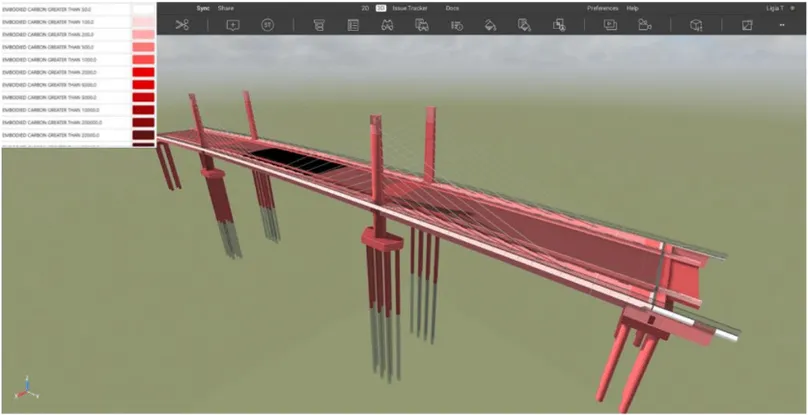
- There is a hypothesis that BIM can automate quantity take-offs of designs and link the BIM models to embodied carbon information, thereby automating the measurement of embodied carbon in construction projects. In this case study, we have embedded the embodied carbon information back into the model.
- The embodied carbon information comes from the Global Warming Potential (GWP)information provided to the Alliance from their concrete suppliers through the procurement process. So the Alliance can have certainty around its accuracy. This integration allows us to visualise the carbon ‘hot spots’ of the design and serves as a powerful communication tool for the Alliance team to better understand the complex issue of embodied carbon in construction.
Challenges and outcomes
So far, we have identified the elements within the bridge that are the most carbon intensive. We have also found that the implementation of this process requires several key factors to be successful:
- Collaboration from all relevant stakeholders on the project (Designers, Sustainability team, BIM team, Procurement team, etc.) to ensure the right information is embedded into the models.
- Consistent naming of elements in the BIM models is critical to ensure that the data entered into the model leads to verifiable outcomes.
- It is essential to ensure quantity information is included in the BIM model to allow for automation of the take-offs
- The project is progressing well as demonstrated by the image below, which shows the order of magnitude of the embodied carbon in the bridge.
Next steps
The next steps involve including the base case materials and embodied carbon in the model so that elements with the greatest reduction can also be visualised. There are also plans to update the embodied carbon data in the models periodically and extract the carbon information so that the embodied carbon can be tracked as the project progresses. Using the carbon data to tell the story of where things have increased or decreased to the Alliance team would be beneficial as well.
Read the article - Digital tools drive decarbonisation in infrastructure projects